Who We Are Founders Our Origin Regions Products Tea Quality Work With Us Contact
Downloads Product Portfolio Coming soon Catalogue Coming soon Tea Catalogue Coming soon
Chat on WhatsApp
Northeast Ginger — Assam, Arunachal Pradesh, Nagaland & Meghalaya
Conventional Spice
Regional OriginConventional Spice

Northeast Ginger

Rooted in the Eastern Himalayas. Celebrated for Its Distinctive Aroma, Pungency and Flavour.

OriginAssam, Arunachal Pradesh, Nagaland & Meghalaya
Botanical NameZingiber officinale Roscoe
Key CompoundsGingerols & volatile oils
FamilyZingiberaceae
FormsFresh / Slices / Powder

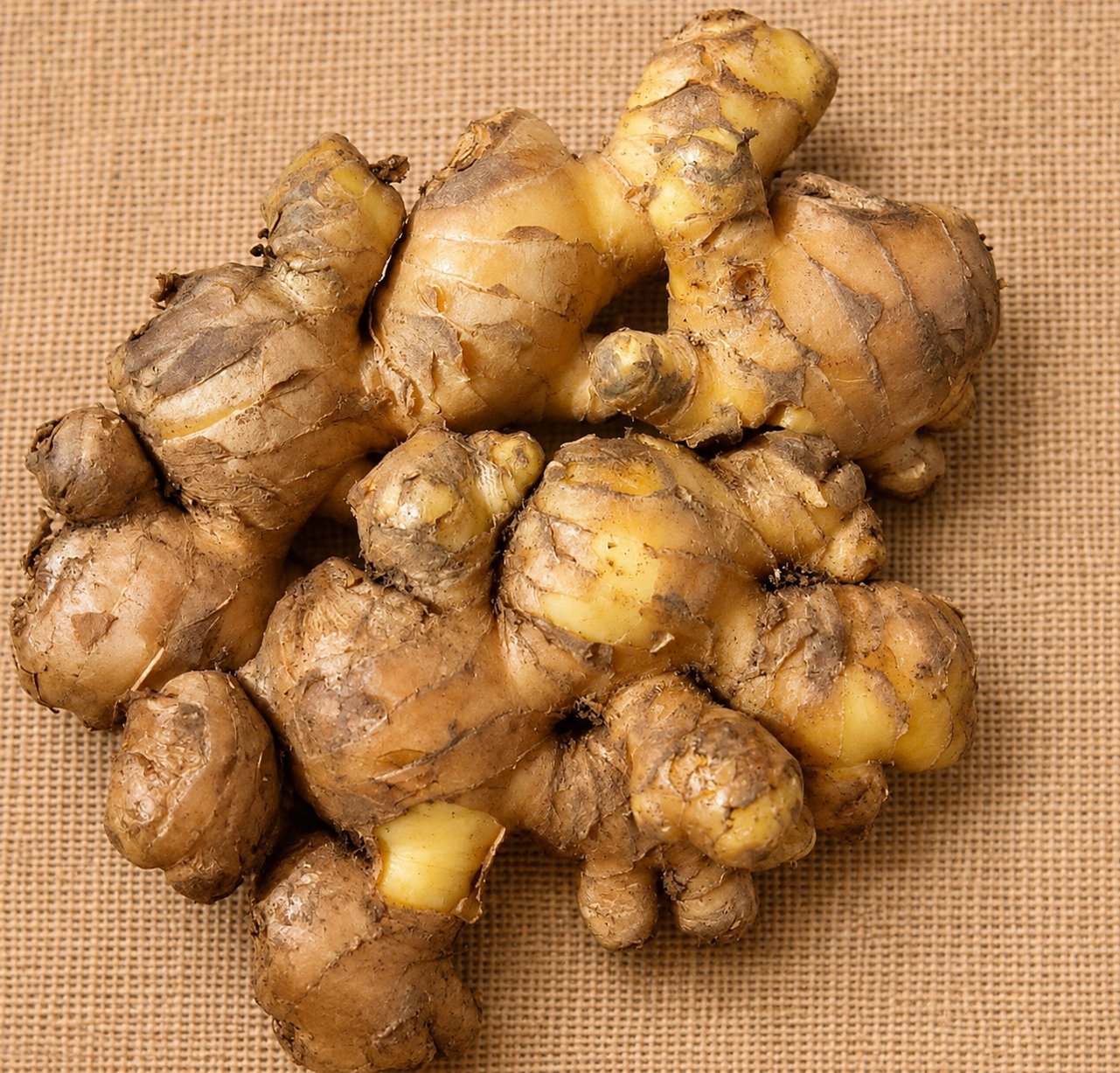
Ginger is one of the most valued spice crops of Northeast India, cultivated across diverse landscapes and agro-climatic conditions. From the fertile plains and hills of Assam to the highland growing regions of Arunachal Pradesh, Nagaland and Meghalaya, ginger cultivation forms an important part of the region’s agricultural traditions and rural livelihoods.

The region is home to several local ginger cultivars, each reflecting the diversity of its growing environment and traditional cultivation practices. These cultivars can differ in rhizome size, fibre content, pungency, aroma and chemical composition, giving Northeast Indian ginger a distinctive place among India’s regional spice resources.

Ginger’s characteristic warmth, pungency and aromatic profile come from naturally occurring compounds such as gingerols and volatile oils. These qualities make it an important ingredient across traditional cuisines and modern food, botanical and ingredient-processing industries.

More than a spice — Northeast Indian Ginger represents the agricultural diversity and traditional spice-growing heritage of the region. Cultivated across different landscapes and farming communities, it brings together distinctive regional origins and the familiar warmth of one of the world’s most widely used spices.

For food manufacturers and ingredient buyers, ginger from Northeast India offers an adaptable spice ingredient with multiple applications across the food, nutraceutical, pharmaceutical, cosmetic and botanical ingredient industries.

Trade Specifications
Origin
Assam, Arunachal Pradesh, Nagaland & Meghalaya
Packaging
Bulk packaging as agreed with the buyer
MOQ
On request
Shelf Life
Established per product form and packaging
Price
On Request
Export Availability
Confirmed

Product Specification

Fresh Rhizomes / Dried Slices / Ginger Powder

Appearance
Characteristic ginger rhizome; varies with cultivar, maturity and processing
Colour
Fresh: cream to pale yellow internally; dried forms: pale yellow to light brown
Aroma
Characteristic warm, fresh and aromatic
Flavour
Characteristic pungent, warm ginger flavour
Processing
Cleaning, sorting, grading and form-specific processing as applicable
Shelf Life
Established for the specific product form and packaging
Packaging
Bulk packaging as agreed with the buyer, subject to product form

Composition & Actives

Characteristic Pungency — Associated in part with gingerols and related pungent constituentsAromatic Constituents — Volatile oil componentsNatural Variation — By cultivar, origin, maturity, growing conditions and post-harvest handling

Nutritional Values

NutrientValue
Energy230 kJ
Protein2.22 g
Total Fat0.85 g
Carbohydrate8.97 g
Total Dietary Fibre5.36 g
Ash1.33 g
Moisture81.27 g

Reference values per 100 g fresh ginger (IFCT 2017, food code G014) — Source: Indian Food Composition Tables 2017 (ICMR–NIN), food code G014, based on samples from six geographical regions. National reference values for fresh ginger only — not guaranteed values for Northeast-origin lots, and not applicable as-is to dried slices or powder.

Applications

  • Food & beverage manufacturing
  • Spice blends, seasonings, marinades & sauces
  • Chutneys & condiments
  • Bakery, confectionery & snack foods
  • Instant foods & ready-to-eat preparations
  • Tea, infusions & beverages
  • Nutraceutical & dietary supplement development
  • Herbal & traditional botanical formulations
  • Cosmetics, personal care & fragrance
  • Essential oil, oleoresin & botanical extracts
  • Food research & ingredient innovation

Key Benefits

  • Distinctive regional sourcing — sourced from established ginger-growing regions of Assam, Arunachal Pradesh, Nagaland and Meghalaya
  • Characteristic pungency — naturally occurring gingerols contribute to its characteristic pungent flavour
  • Aromatic profile — volatile oils are responsible for ginger’s familiar warm and fresh aroma
  • Regional cultivar diversity — local cultivars reflect variations in rhizome characteristics and composition across growing regions
  • Multiple product forms — fresh, dried ginger slices and ginger powder, subject to sourcing and processing requirements
  • Variety of applications — food & beverage, nutraceuticals, herbal formulations, cosmetics, essential oils & oleoresins
Quality Assurance & Disclaimer. The information provided is for general product identification and preliminary buyer evaluation. Natural agricultural products may vary according to origin, cultivar, soil and climatic conditions, maturity at harvest, post-harvest handling, drying and processing. Nutritional figures are published reference values from IFCT 2017 for fresh ginger and are not product-lot guarantees; they are not applicable as-is to dried ginger slices or ginger powder. Final product parameters, including moisture, microbiological quality, heavy metals, pesticide residues and any buyer-specific requirements, should be verified through appropriate batch testing and agreed specifications. For every commercial order, EasternRidge Organics can provide a batch-specific Certificate of Analysis (COA) and relevant laboratory reports where available or as agreed with the buyer. Applications listed are potential ingredient and product-development areas and do not constitute therapeutic claims or regulatory approvals. Buyers are responsible for confirming compliance with the regulations and import requirements of the destination market. Shelf life and storage conditions should be confirmed for the specific product form and packaging.

Research & Official References

  1. Longvah, T., Ananthan, R., Bhaskarachary, K. & Venkaiah, K. (2017). Indian Food Composition Tables 2017. National Institute of Nutrition, ICMR
  2. ICAR – Indian Institute of Spices Research: Ginger crop information and cultivation resources
  3. ICAR Research Complex for NEH Region: Present Status and Prospects of Ginger and Turmeric in NE States
  4. Research study: Antioxidant Potential and Nutritional Compositions of Selected Ginger Varieties Found in Northeast India
  5. Assam Agricultural University: Research on ginger cultivars from the Karbi Anglong hills of Assam
  6. ICAR Kharif Agro-Advisories for Farmers (2025): Ginger cultivation recommendations

Interested in Northeast Ginger?

Tell us the form, quantity and destination — your request arrives on our trade desk’s WhatsApp, ready to price.

Related Origins